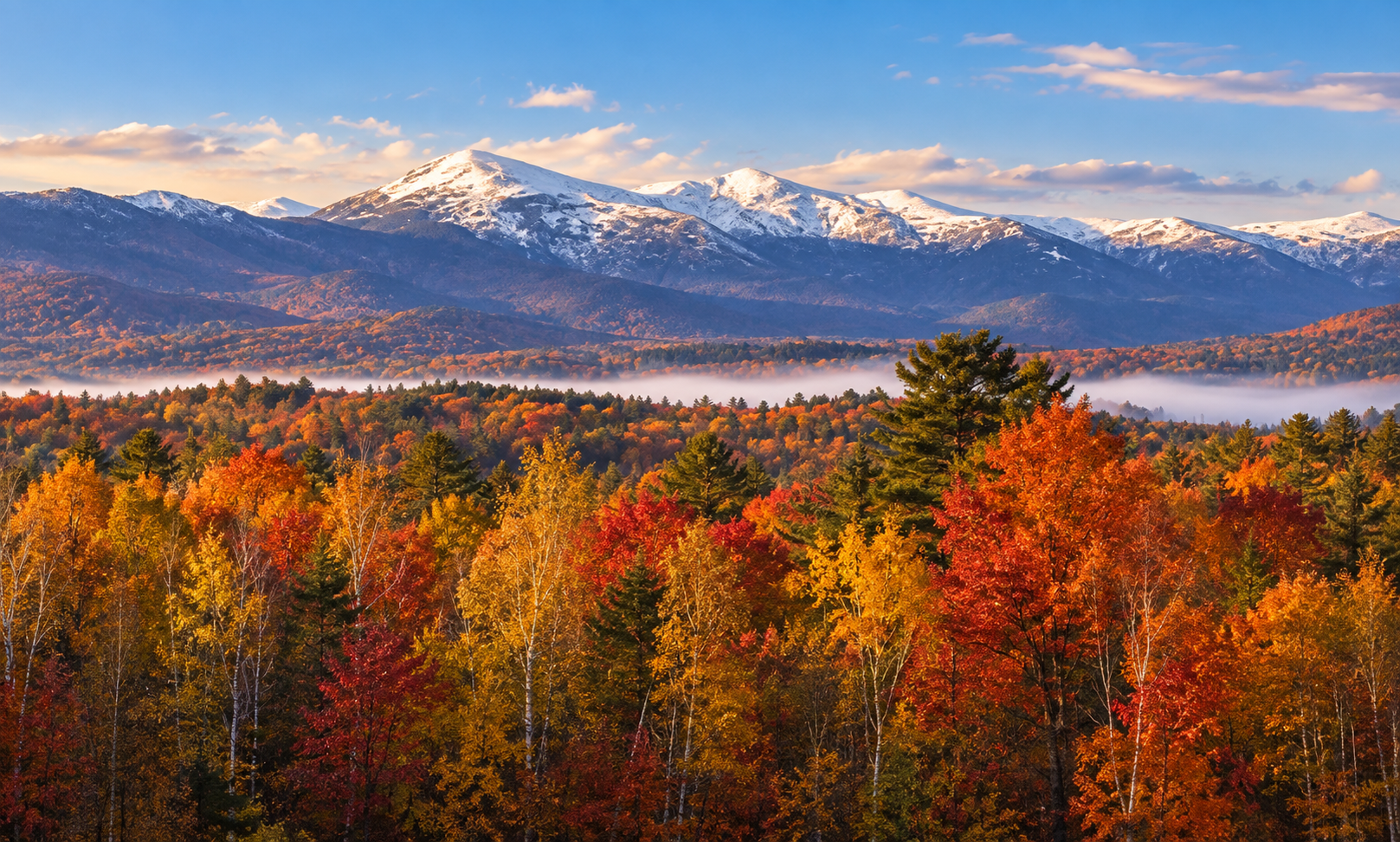


Maine is home to more than 60 historic lighthouses along its rugged Atlantic coastline, making it one of the best destinations in the U.S. for scenic coastal drives and lighthouse tours. From Portland to Acadia National Park, these iconic beacons offer breathtaking ocean views, rich maritime history, and some of the most photographed landscapes in New England. And you can visit the best lighthouses in Maine in one day!
Planning a lighthouse day trip from Western Maine? The Center Lovell Inn offers a peaceful countryside retreat just a scenic drive from Maine’s coast—perfect for pairing mountain views with iconic lighthouse adventures.
9 Must-Visit Lighthouses in Maine (Best Coastal Day Trip Guide)
Stay at Center Lovell Inn on Your Route 1 Adventure


Portland Head Light (Cape Elizabeth) – Maine’s Most Famous Lighthouse

Commissioned by George Washington, Portland Head Light was built on the orders of Henry Dearborn, the nation’s first Secretary of War. The adjacent keeper’s house now operates as a museum, while the surrounding Fort Williams Park provides hiking trails, picnic spots, and panoramic ocean views. Still in service, its beam can be seen up to 24 nautical miles away.
Lighthouse Facts about Portland Head Light
- Year Built: 1791 (Maine’s oldest lighthouse)
- Height: 80 feet
- Focal Height: 101 feet (focal height means the height of the light above sea level, which determines how far away the light can be seen at sea); Originally used Whale oil lamps.
- Status: Active aid to navigation, automated
- Access: Public (grounds and museum open daily)
- Heritage: Officially listed on the National Register of Historic Places on April 24, 1973
- GPS Address: 12 Captain Strout Circle, Cape Elizabeth, ME 04107
✦ The park grounds are open year-round from sunrise to sunset. Visitors can walk along the cliff-side trails, explore the rocky shoreline, and view the lighthouse from multiple scenic angles.
The Portland Breakwater Light — “Bug Light”

The Portland Breakwater Light, affectionately known as “Bug Light” due to its small 26-foot stature, is a historic cast-iron lighthouse located in South Portland, Maine. It is the centerpiece of Bug Light Park, a nearly 9-acre green space offering panoramic views of Portland Harbor and the city skyline.
Lighthouse Facts about The Portland Breakwater Light
- Year Built: 1875 (The current cast-iron tower replaced a wooden one from 1855).
- Height: 24–26 feet (depending on the source; it is famous for being extremely short).
- Focal Height: 30 feet above sea level.
- The Light: The original lens was removed when it was extinguished in 1942; it was relit in 2002.
- Status: Active as a private aid to navigation (it was reactivated in 2002 after being dark since 1942).
- Access: Public grounds and park; The park is open daily from 6:00 AM to 9:00 PM. Ample free parking is available along the waterfront in the park. However, the lighthouse interior is generally Private (closed to the public) except for special events like Maine Open Lighthouse Day.
- Liberty Ship Memorial: Located at the opposite end of the park, this 65-foot steel silhouette honors the 30,000 workers who built 236 Liberty Ships at this site during WWII.
- Heritage: Listed on the National Register of Historic Places
- GPS Address: Bug Light Park is located at South Portland, ME 04106 (specifically near the end of Madison St or Bug Light Rd).
✦ The lighthouse is the centerpiece of Bug Light Park in South Portland, which has deep historical roots in World War II. The park is a popular spot for kite flying, picnicking, and saltwater fishing.
Spring Point Ledge Lighthouse
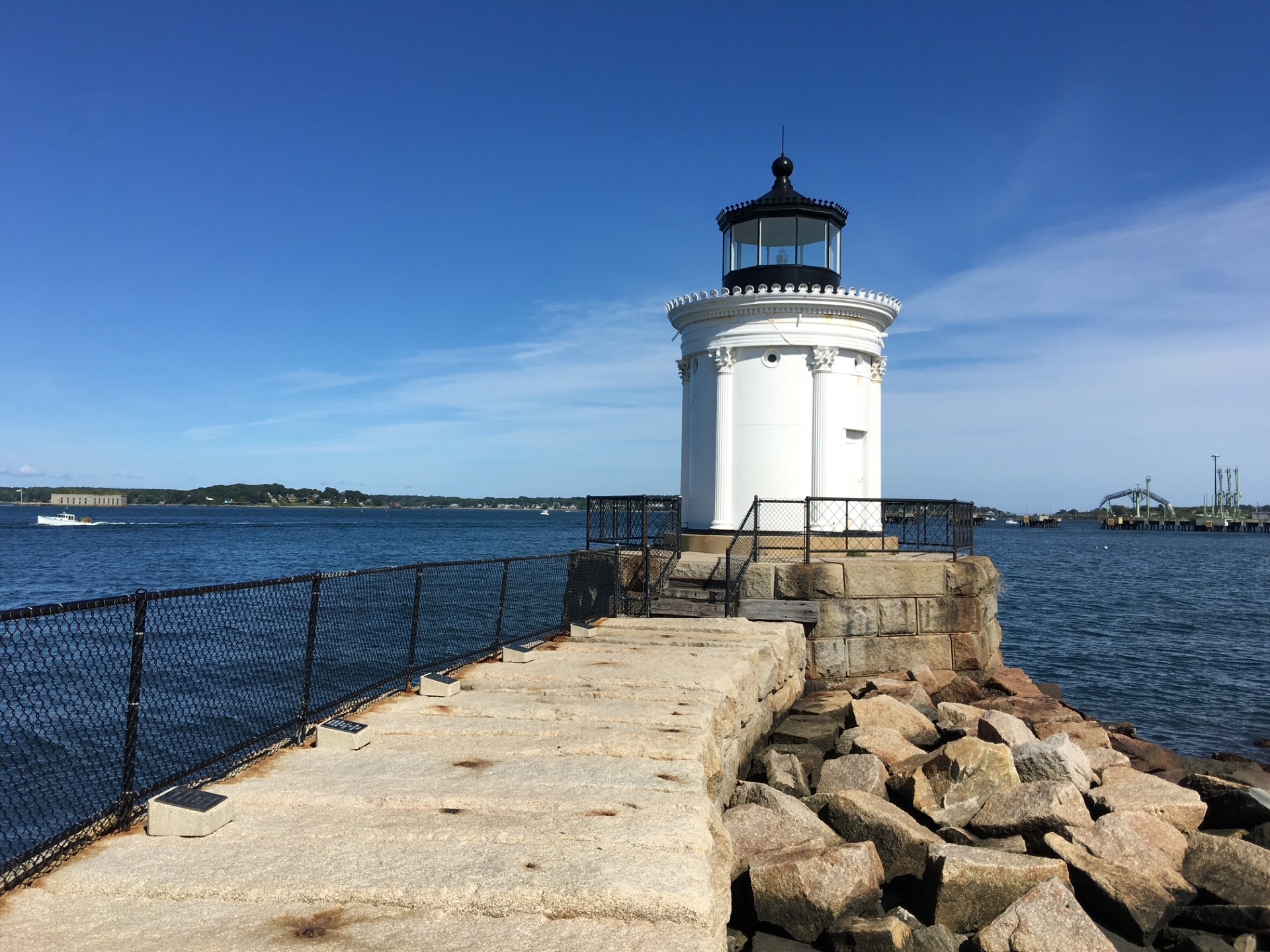
Spring Point Ledge Lighthouse is a historic “sparkplug-style” beacon located in South Portland, Maine, at the end of a granite breakwater on the Southern Maine Community College (SMCC) campus. It is the only caisson-style light station in the United States that visitors can walk to from land.
Lighthouse Facts about Spring Point Ledge Lighthouse
- Year Built: 1835 (Current tower; original 1827 structure was poorly built and replaced).
- Height: 38 feet.
- Focal Height: 79 feet above sea level.
- Status: Active aid to navigation.
- Access: Public. The park and tower are open seasonally from mid-May through late October.
- Park Admission: Approximately $3.00–$4.00 per adult; children 5–11 are $1.00. Includes picnic areas, public restrooms, and WiFi.
- Tower Climbing: Usually a suggested $1.00 donation.
- The Fishermen’s Museum: Located in the first floor of the Keeper’s House, showcasing local maritime history.
- Pemaquid Art Gallery: Features rotating works from local artists.
- Heritage: Listed on the National Register of Historic Places in 1988.
- GPS Address: 3115 Bristol Road, New Harbor, ME 04554 corresponds to the Pemaquid Point Lighthouse Park.
Spring Point Ledge Lighthouse was rebuild in 1897 to warn mariners of a dangerous ledge in Portland Harbor. This design is a “sparkplug” or caisson-style tower, approximately 54 feet tall. Uniquely, its upper works are made of brick rather than the typical cast iron to better withstand Maine’s harsh winters. Originally only accessible by boat, a 900-foot breakwater made of 50,000 tons of granite was added in 1951 to connect it to the mainland.
✦ The Rocks are famous for dramatic, stratified granite ledges that are popular for exploring and photography.
Nubble Light (Cape Neddick Lighthouse) — York

Located in York, Maine, Nubble Light (formally known as the Cape Neddick Light Station) is one of the most iconic and photographed lighthouses in the world. It is uniquely situated on a small, 2.8-acre rocky island—the “nubble”—just 100 yards off the mainland, making it both highly visible and a protected, distinct subject for photography
Lighthouse Facts about Nubble Light (Cape Neddick Lighthouse)
- Year Built: 1879
- Height: 41 feet
- Focal Height: 88 feet
- The Light: Features a distinctive red light characteristic.
- Status: Active aid to navigation, automated
- Access: Private island (viewed from Sohier Park)
- No Island Access: The lighthouse and the island are inaccessible to the general public. There is no bridge or ferry for visitors; the only way to step foot on the island is by winning a rare annual “picnic raffle” held by the town.
- Best Viewpoint: Sohier Park on the mainland provides an excellent unobstructed view of the lighthouse across the narrow channel.
- Amenities: The park features a seasonal Welcome Center (open May to mid-October) with public restrooms and a gift shop. You can also find granite benches and grassy areas for picnicking.
- Heritage: Cape Neddick Light Station) was listed on the National Register of Historic Places on April 16, 1985
- Parking: Free parking is available at Sohier Park, though it fills quickly during peak summer months.
- GPS Address: 3115 Bristol Road, New Harbor, ME 04554
✦ Nubble Light sits dramatically on a rocky island just off York’s shore. Nubble Light’s image even traveled into space aboard the Voyager spacecraft in 1977, as part of a pictorial representation of Earth’s landmarks.
Goat Island Lighthouse — Kennebunkport

Goat Island Lighthouse is an active, historic lighthouse located on a small island off Cape Porpoise, near Kennebunkport, Maine. Owned and maintained by the Kennebunkport Conservation Trust since 1993, the station was restored to its 1950s appearance in 2011.
Lighthouse Facts about Goat Island Lighthouse
- Height: The tower is 25 feet tall.
- Focal Height: The focal plane (the height of the light source) is 38 feet above mean high water.
- The Light: Automated in 1990, replacing its classical lens with a 300mm modern optic.
- Status: Active. The U.S. Coast Guard maintains the light as a navigational aid, though the property is owned and managed by the Kennebunkport Conservation Trust.
- Island Access: You can only reach the island by boat or kayak. A small dock is available for visitors, but it is tide-dependent and typically accessible only for a few hours around high tide.
- Heritage: Listed on the National Register of Historic Places on March 23, 1988.
- GPS Address: The lighthouse itself does not have a street address. Its location is:
- Latitude: 43°21’28.3″N
- Longitude: 70°25’30.6″W
✦ Access to Goat Island Lighthouse is by boat or kayak only. A small dock is available for visitors, though it is tide-dependent and typically usable for just a few hours around high tide. During the summer months, visitors can land on the island at high tide and explore the grounds. If the volunteer keepers are present, limited tours of the lighthouse tower may also be offered.
For those staying on shore, the lighthouse can be viewed from the pier at the end of Pier Road in Cape Porpoise, offering a scenic vantage point of this historic coastal landmark.
Pemaquid Point Light — Bristol

Pemaquid Point Light, located at the tip of the Pemaquid Neck in Bristol, Maine, is one of the most iconic and frequently visited lighthouses on the Maine coast. It is famously perched atop dramatic, “taffy-pulled” metamorphic rock formations that date back hundreds of millions of years.
Lighthouse Facts about Pemaquid Point Light — Bristol
- Year Built: 1827 (rebuilt in 1835)
- Height: 38 feet
- Focal Height: 79 feet
- The Light: It features a fourth-order Fresnel lens that flashes white every six seconds and is visible for 14 nautical miles. One of only six Fresnel lenses still in active service in Maine.
- Status: Active, automated
- Access: Public (tower and grounds open)
- Climbing the Tower: Visitors can climb the spiral staircase to the top for a small $1.00 suggested donation. Note that there is a 46-inch height requirement for safety.
- Fishermen’s Museum: Housed in the 1857 Keeper’s Quarters, this museum displays regional maritime artifacts and a Fresnel lens from Baker Island Light.
- Heritage: Listed on the National Register of Historic Places on April 16, 1985
- GPS Address: 3115 Bristol Road, New Harbor, ME 04554
✦ In 2003, Pemaquid Point Light became the first lighthouse featured on U.S. currency, appearing on the Maine State Quarter alongside a three-masted schooner.
Owls Head Light — Owls Head State Park, Maine

Located in Owls Head State Park near Rockland, Maine, Owls Head Light is a compact but commanding lighthouse perched atop an 80-foot granite bluff. Though the tower itself is surprisingly short, its elevated position gives it a focal plane of 100 feet above sea level, making its light visible for up to 16 nautical miles.
Lighthouse Facts about Owls Head Light
- Year Built: 1825
- Height: 30 feet
- Focal Height: 100 feet
- The Lens: It houses a fourth-order Fresnel lens installed in 1856, which remains in active service today. It is one of only six classical Fresnel lenses still operating in Maine.
- Status: Active, automated
- Access: Public (grounds and keeper’s house museum)
- To reach the lighthouse, visitors take a roughly 0.25-mile walk through a wooded trail from the parking lot. There are 53 steps leading up the bluff to the tower.
- Keeper’s House Museum: The 1854 keeper’s house serves as the headquarters for the American Lighthouse Foundation and contains an interpretive center and gift shop.
- Heritage: Was added to the National Register of Historic Places on January 18, 1978.
- GPS Address: 186 Lighthouse Road, Owls Head, ME 04854
✦ Though modest in size, Owls Head Light commands sweeping views of Penobscot Bay. The site includes walking trails, picnic areas, and a small museum inside the former keeper’s quarters. Owls Head is frequently cited as one of the most haunted lighthouses in America.
Bass Harbor Head Light Station — Mount Desert Island (Acadia National Park)

Lighthouse Facts about Bass Harbor Head Light Station
Located on the southwestern tip of Mount Desert Island in Acadia National Park, the Bass Harbor Head Light Station is one of the most iconic and photographed lighthouses in New England. Built in 1858, it marks the entrance to Bass Harbor and Blue Hill Bay
- Year Built: 1858
- Height: 32 feet
- Focal Height: 56 feet
- The Light: The station features a fourth-order Fresnel lens manufactured in Paris by Henry-Lepaute. It displays an occulting red light (4 seconds on, 1 second off) that is visible for 13 nautical miles.
- Status: Active, automated
- Access: Public (grounds open; lighthouse itself not open to the public)
- The grounds are open daily from 9:00 AM to sunset. Admission is free with a valid Acadia National Park entrance pass.
- Heritage: added to the National Register of Historic Places on January 21, 1988
- GPS Address: 2 Lighthouse Road, Bass Harbor, ME 04653
✦ Set on rugged cliffs, it’s a favorite for sunset views and photographs. The surrounding walking paths allow for dramatic viewpoints of the lighthouse against the Atlantic.
West Quoddy Head Lighthouse, Downeast, Maine

Lighthouse Facts about West Quoddy Head Lighthouse, Downeast, Maine
Located in Quoddy Head State Park in Lubec, Maine, West Quoddy Head Lighthouse is a world-renowned maritime landmark famous for being the easternmost point of the contiguous United States. It is uniquely identified as the only “candy-striped” lighthouse in the country, featuring a distinctive pattern of 8 red and 7 white horizontal stripes.
- Year Built: The original wooden tower was built in 1808. The current brick tower was constructed and first lit in 1858.
- Height: The tower itself stands 49 feet (15 meters) tall.
- Focal Height: The light source is positioned 83 feet (25 meters) above mean high water.
- Status: Active. It is an automated aid to navigation maintained by the U.S. Coast Guard.
- Access: Located within Quoddy Head State Park.
- Grounds: The grounds are open to the public year-round.
- Lighthouse Tower: The tower itself is not open to the public for climbing.
- Museum/Visitor Center: A museum is located in the 1858 keeper’s house and is open seasonally (typically May–October).
- Parking & Fees: On-site parking is available. There is a small entry fee for Quoddy Head State Park.
- Heritage: The West Quoddy Head Light Station was added to the National Register of Historic Places on July 4, 1980.
- GPS Address: 973 S Lubec Rd, Lubec, ME 04652.
✦ As the easternmost point in the U.S., it is a premier location to be the first to see the sunrise in the country.
The Arctic Bog & Boardwalk

Beyond the lighthouse, Quoddy Head State Park offers a unique landscape of rugged cliffs and a rare sub-arctic ecosystem. There is The Arctic Bog & Boardwalk.
- The Boardwalk: A raised wooden path with interpretive signs allows you to walk directly over the sensitive peat moss without damaging the environment.
- Rare Plant Life: This “naturalist’s delight” features plants typically found much further north in Canada and the Arctic, such as carnivorous pitcher plants, sundews, and black crowberry.
- Hiking Trails: Over 5 miles of trails wind through forests, wetlands, and along 80-foot volcanic rock cliffs.
- Coastal Trail: Offers expansive views of the Quoddy Narrows and the Bay of Fundy.
- Bog Trail: Includes a boardwalk through a rare coastal plateau bog featuring sub-arctic and carnivorous plants like pitcher plants.
- Wildlife: Visitors may spot humpback, minke, and finback whales offshore during the summer, as well as seals and rare nesting sea birds.
- Accessibility: The western portion of the nearby Coast Guard Trail is accessible for motorized wheelchairs, but the Bog Trail itself is largely a narrow boardwalk meant for foot traffic.
Learn more
Map of 9 Must Visit Lighthouses of Maine — A Timeless Coastal Adventure
Where to Stay for a Maine Lighthouse Trip
While many visitors stay along the coast, choosing lodging in Western Maine offers a quieter, more scenic experience with easy access to both the mountains and the ocean.
The Center Lovell Inn is ideally located near Fryeburg and North Conway, making it a perfect home base for exploring Maine’s lighthouses, the White Mountains, and the Lakes Region.
👉 Book Your Stay at Center Lovell Inn
Lighthouse Preservation in Maine
Maine’s lighthouses are preserved through the Maine Lighthouse Program, created in 2000 in partnership with the U.S. Coast Guard, the State of Maine, and nonprofit organizations. The program ensures that historic lighthouses no longer critical for navigation are transferred to local communities and nonprofits for preservation, while still remaining accessible to the public.
Organizations like the American Lighthouse Foundation and local “Friends of” groups maintain the structures, restore towers, and keep alive the stories of the lighthouse keepers who once braved storms to keep the lights burning.
FAQs About Visiting Maine Lighthouses
How many lighthouses are in Maine?
Maine is home to more than 60 historic lighthouses along its coastline.
Can you visit Maine lighthouses in one day?
Yes—many southern Maine lighthouses, especially near York and Portland, can be visited in a single scenic day trip.
What is the most famous lighthouse in Maine?
Portland Head Light is the most iconic and photographed lighthouse in the state.
Lighthouse Terms & Glossary
Understanding lighthouses means knowing some key terminology:
- Pharologist: A person who studies or is interested in lighthouses.
- Wickie: A nickname for a lighthouse keeper, referencing their task of trimming the lamp’s wick.
- Tower: The vertical structure that houses the light.
- Lamp: The device inside the lens that produces the light, which could be anything from an oil lamp to a modern electric light bulb.
- Lantern: The glassed-in chamber at the top of the tower where the light shines.
- Lens: The optical system that focuses the light beam. Most Maine lighthouses used Fresnel lenses, developed in the 1820s.
- Fresnel lens: An advanced type of lens, invented by Augustin-Jean Fresnel in 1822, that uses a system of concentric ridges and prisms to focus and magnify light into a powerful, concentrated beam.
- Focal Height: The height of the light above sea level, not just the tower’s height. This determines how far out to sea the light can be seen.
- Characteristic: The unique sequence of light flashes and eclipses (periods of darkness) that allows a mariner to identify a specific lighthouse.
- Daymark: The painted color or pattern on the tower, allowing it to be identified during the day.
- Flash Pattern: The unique sequence of light flashes or intervals each lighthouse displays, enabling mariners to identify them at night.
- Fog Signal: A horn, bell, or whistle sounded during poor visibility.
- Nominal Range: The maximum distance a light can be seen in clear weather.
- Range lights: A pair of lights, one placed higher than the other, that indicate a safe channel when aligned vertically.
- Automated: Most lighthouses today are automated, meaning no human keeper is required to operate the light.
- Lightship: A vessel that serves as a lighthouse and is anchored in locations unsuitable for a permanent tower.
- Decommissioned: A lighthouse that no longer functions as a navigational aid.
- Lighthouse Keeper: A lighthouse keeper or lightkeeper is a person responsible for tending to and caring for a lighthouse, particularly the light and lens in the days when oil lamps and clockwork mechanisms
Why Explore Maine’s Lighthouses During Your Stay
Exploring Maine’s lighthouses is more than a sightseeing trip—it’s a journey through the state’s maritime history, coastal culture, and natural beauty. Each lighthouse offers its own unique experience, from museums and gift shops to picnic spots and walking trails. Guests of the Center Lovell Inn can spend the morning enjoying the peaceful lakes and mountains, then set out on a coastal drive to visit these timeless beacons before returning to the comfort of the Inn.
Whether you’re a history buff, a photographer, or simply someone who loves the romance of the sea, Maine’s lighthouses are sure to leave a lasting impression.
**Check-out: Maine’s Coastal Route 1 – Only the Best Stops
🏡︎ Reserve your stay at Center Lovell Inn today!
🍽️ Check-out our Curated – Food & Beverage Guide for Lovell, Fryeburg & Bridgton, Maine
🍁Visit our Best Fall Foliage in Maine | Best Fall Foliage Drives Near Fryeburg Maine | Best Lighthouses to Visit in Maine | Maine’s Coastal Route 1 | Evans Notch Scenic Byway Guide for more fall fun things to do.